
What to Do if Your Dog Is Bleeding
Seeing your dog bleeding is frightening—but you’re in the right place.
In this guide, we’ll walk you through how to manage external bleeding with simple first aid, how to recognise signs that something more serious may be happening, and when it’s time to head straight to the vet.
It’s important to know that first aid is not a replacement for veterinary care. It’s what you do on the way to the vet, or while deciding how urgently your dog needs to be seen.
Need to know how to stop a dog bleeding from the paws, ears, nose or mouth? Learn basic pet first aid, mistakes to avoid, and when to visit a Sydney vet.
How to Stop a Dog Bleeding – Step-by-Step First Aid
- Stay calm: Your dog will sense your anxiety. Speak softly and move slowly.
- Protect yourself: Even gentle dogs may bite when in pain. Use a towel to gently restrain if needed, or have someone hold your dog. Consider a muzzle if you have one accessible.
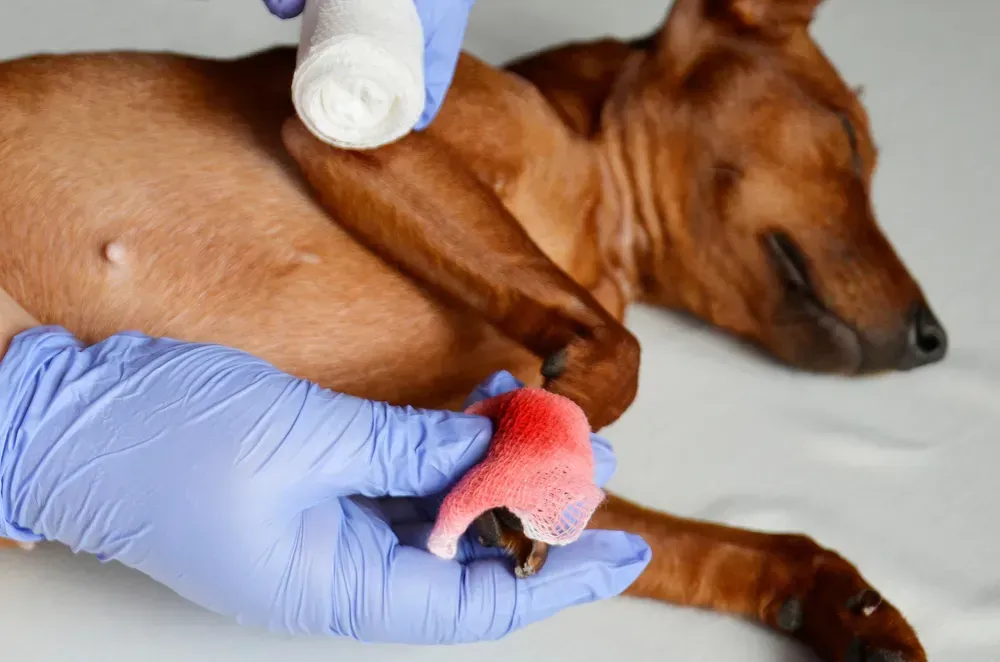
- Apply firm, gentle pressure: Only attempt to do your dog’s wound care at home if you’re confident you can do it safely. Place a clean cloth, gauze, or towel directly over the wound. Hold firmly for 5–10 minutes without lifting to check. If blood soaks through, do not remove the cloth — add another layer on top.
- Elevate if possible: If the wound is on a leg and there's no sign of a fracture, gently raise the limb above heart level while maintaining pressure.
- Don't remove embedded objects: If something is lodged in the wound (stick, glass), leave it in place. Removing it could worsen the bleeding. Wrap around it carefully and get to a vet.
- Assess after 10–15 minutes: If bleeding has slowed or stopped, keep the wound covered and monitor closely. If it hasn't stopped, transport your dog to the closest vet immediately.
- Keep blood-soaked cloths: If you need to change bandages on the way to the vet, take the used ones with you. They help the veterinary team estimate how much blood your dog has lost.
How to Treat a Dog’s Bleeding by Body Part
Dog Bleeding From Bottom
Rectal bleeding can be a sign of multiple issues. Start by noting the colour. Bright red blood on the surface of stools often suggests anal gland issues, colitis, or a minor rectal tear. Dark, tar-like stools can indicate bleeding higher in the digestive system and are more serious.
Do not probe the area yourself. Take a photo or bring a stool sample in a sealed bag to help your vet assess the problem. Persistent bleeding, dark stools, or any accompanying lethargy or vomiting warrants a prompt visit.
Dog Bleeding From Nose
Nosebleeds aren’t overly common in dogs, so they should always be taken seriously.
Keep your dog still but don’t tilt their head back or pack their nostril with tissue. Gently apply a cold compress across the bridge of the nose. If bleeding doesn't stop within 5–10 minutes, comes from both nostrils, or your dog is also lethargic and/or bruising easily, see a vet.
Dog Bleeding From Mouth
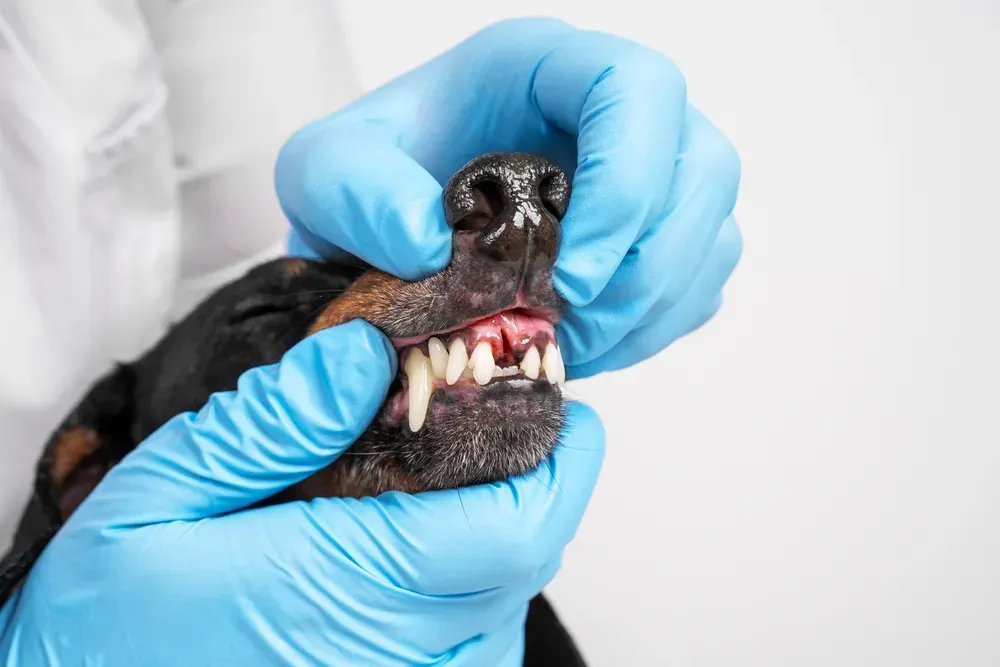
Oral bleeding is often the result of a dog chewing something hard or sharp, or a dental issue like a loose or rotten tooth. However, it’s important not to make assumptions.
If your dog allows it, gently check inside their mouth with a torch to try and find the source. Apply gentle pressure with damp gauze if tolerated.
Do not attempt to remove a broken tooth or dislodge objects caught between teeth. See a vet if bleeding persists beyond 10 minutes, you spot a broken tooth, visible lump, or can't identify the source — unexplained bleeding from the mouth should always be investigated.
Dog Bleeding From Paw Pad
Paw wounds can occur for many reasons. Check for debris (glass, thorns, grass seed), and if something is visible and superficial, gently pull it out with a pair of clean tweezers.
If lodged deep, leave it for the vet to remove. Wrap the paw in gauze and apply steady pressure. Bleeding may restart when your dog walks, so try to keep them still and carry smaller dogs if you are able.
Dog Bleeding From Ear
Ear wounds can bleed heavily due to many surface blood vessels, and dogs shaking their heads makes it worse.
Place gauze on both sides of the ear flap, fold the ear over the top of the head, and hold firmly in place. You can loosely wrap tape around the head to secure it — but ensure you can fit two fingers between the bandage and your dog's neck to avoid restricting their breathing. Ear bleeds can be serious and should be checked by a vet.
Dog Bleeding From Nail
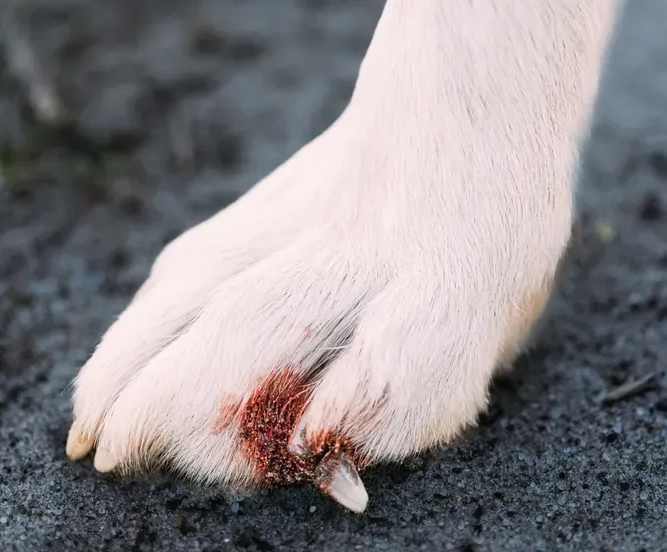
Broken or torn nails are very common and surprisingly bloody.
Apply styptic powder if you have any (otherwise cornflour will do the trick) or press the nail tip into a bar of soap to help clot. Wrap the paw gently. If the nail is dangling or your dog is in significant pain, a vet should remove the damaged portion — don't attempt this yourself at home.
Dog Bleeding From Torso/Chest/Abdomen
This type of bleeding is often caused by severe trauma (hit by a car, a fall, a fight with another animal) or the rupture of an internal organ tumour, making it potentially very serious.
Tape gauze or a towel in place, but don’t tape it too tightly. You should not restrict your dog's breathing. Hold the compress firmly and get to an emergency vet immediately.
Common Mistakes to Avoid When Your Dog Is Bleeding
- Don't remove embedded objects: Pulling out glass, sticks, or other objects can worsen bleeding and cause further tissue damage. Leave removal to your vet.
- Don't use hydrogen peroxide, alcohol, or iodine: These damage tissue and delay healing. For minor wounds, clean gently with lukewarm water or saline only.
- Don't apply a tourniquet: Unless you've been specifically trained, an incorrectly placed tourniquet can cut off blood supply and lead to tissue death or limb loss.
- Don't pull away a blood-soaked cloth: This dislodges forming clots and restarts bleeding. Always add layers on top instead.
- Don't let your dog lick the wound: Saliva introduces bacteria and disrupts clotting. Use an Elizabethan collar (cone) if you have one available.
- Don't assume a small wound is harmless: Bite wounds and punctures often look minor on the surface but can involve significant damage and infection risk beneath the skin and fur.
What Are the Signs of Internal Bleeding in Dogs?
Internal bleeding in dogs isn't visible but can be fatal. It is often the result of trauma or from ingesting something poisonous.
Warning signs of internal bleeding include:
- Pale or white gums
- Rapid or shallow breathing
- Weakness, lethargy, or collapse
- Swollen or tender abdomen
- Coughing or vomiting blood
- Black, tarry stools
- Bleeding from the nose, mouth, or rectum without an obvious wound
In Australia, one of the most common causes is rat bait ingestion. Anticoagulant poisons prevent the blood from clotting, and symptoms sometimes don’t appear for 2–5 days.
A brown snake bite is another serious cause, as the venom triggers coagulopathy (the inability to form blood clots). Severe tick paralysis can also lead to bleeding gums and internal haemorrhage in advanced cases.
If your dog has access to sheds, garages, bushland, or rural areas, these risks should always be considered — even if you didn't witness the exposure.
Need help knowing what’s toxic? Use our free online Pet Poisons Guide and questionnaire.
When Should I Take My Bleeding Dog to the Vet?
It’s not always easy to know whether a bleeding wound is an emergency or something you can manage at home. When in doubt, it’s always safest to have your dog checked by a vet.
Go to the vet immediately if:
- Bleeding doesn’t stop after 10–15 minutes of steady pressure
- The wound is deep, gaping, or you can see tissue beneath the skin
- Bleeding is bright red and spurting (this can indicate an arterial bleed)
- Your dog was bitten by another animal (bite wounds often look small but can cause serious infection and hidden damage)
- Your dog was hit by a car, fell from a height, or experienced significant trauma
- There’s an object embedded in the wound
- Your dog shows signs of shock, such as pale gums, rapid breathing, weakness, or disorientation
- You suspect internal bleeding
- The wound is near the eyes, chest, or abdomen
What Happens When You Bring Your Dog to Sydney Animal Hospitals
In an emergency, no appointment is needed. You just walk straight into your local Sydney Animal Hospitals location and let reception know your dog is bleeding and they'll prioritise accordingly.
A visit usually goes as follows:
- Triage: A veterinary nurse will assess the wound's severity quickly.
- Examination: The vet will clean and examine the wound, check for deeper damage, and discuss treatment options and estimated costs with you before proceeding.
- Diagnostics: If internal injury is suspected, the vet may recommend X-rays or ultrasound to assess what's happening beneath the surface.
- Treatment: Depending on the wound, this might include thorough wound cleaning under sedation, stitches or staples, pain relief, antibiotics, IV fluids, or surgery for more serious cases. In severe blood loss, a blood transfusion may be required.
- Aftercare: You'll receive clear instructions for at-home wound care, including bandage changes, medications, E-collar use, and when to return for a follow-up.
When your dog is bleeding, you want to know they’re in safe, capable hands. Our team is here to act quickly, keep your dog comfortable, and guide you through every step.
FAQs
How Do I Know if My Dog’s Bleeding Is Serious?
If bleeding doesn’t stop after 10–15 minutes of applying pressure, or your dog is showing signs of shock, this may indicate a serious issue that requires urgent veterinary attention. Key indicators include pale or white gums, rapid breathing, severe weakness, collapse, or cold extremities.
Can I Use Antiseptic on My Dog’s Wound?
Yes, you can use antiseptic on a dog's wound, but it must be pet-safe and diluted. The best choices are chlorhexidine solution (0.05%–2%) or povidone-iodine (0.1%–1%, diluted to the colour of weak tea) to clean and treat minor abrasions.
Should I Bandage My Dog’s Wound at Home?
Yes, you can bandage minor, shallow wounds at home to protect them from dirt and contamination. Use non-stick pads and gauze, ensuring it is snug but not too tight—you should be able to fit two fingers between the bandage and the skin.
What Should I Have In a Pet First Aid Kit?
A well-stocked dog first aid kit should include gauze, antiseptic wipes, antibiotic ointment, tweezers, blunt-ended scissors, a muzzle, saline solution, a thermometer, and a blanket. It should also include items for stabilising injuries like bandages and tape.
Recent Posts