

Is your pet in pain?
What is Chronic Pain by Dr Angela Phillips
Most people have experienced, or know someone who lives with chronic pain. It affects all facets of their professional and personal life. Chronic pain can occur when acute pain isn’t adequately treated, or where there is nerve injury. In medicine, we call this type of pain “maladaptive”. Its as if the nervous system remembers the pain pathway. It develops memory. When this happens, it takes less of a stimulus to set things off. For instance, a light touch might elicit a severe pain response. Eventually, even when the initial problem has resolved and healed, the pain persists. This happens in animals too.
What is Chronic Pain by Dr Angela Phillips
Most people have experienced, or know someone who lives with chronic pain. It affects all facets of their professional and personal life. Chronic pain can occur when acute pain isn’t adequately treated, or where there is nerve injury. In medicine, we call this type of pain “maladaptive”. Its as if the nervous system remembers the pain pathway. It develops memory. When this happens, it takes less of a stimulus to set things off. For instance, a light touch might elicit a severe pain response. Eventually, even when the initial problem has resolved and healed, the pain persists. This happens in animals too.
What is Arthritis?
Arthritis is a degenerative joint disease where the cartilage within the joint is worn away, leading to inflammation and pain. It’s the most common cause of impaired mobility in cats and dogs are the signs of arthritis are often incorrectly attributed to ‘slowing down due to the natural ageing process’.
Cats and dogs can be quite effective at hiding their pain which makes it difficult to recognise arthritis in its early stages.
Arthritis is a lifelong condition that requires a combination of attentive home care and veterinary care.
Take steps to change your pets lifestyle to reduce their arthritis symptoms
FOOD & WATER – CAREFUL WEIGHT MANAGEMENT
Place your pet’s food and water bowls in a location that doesn’t require stretching, climbing or jumping. Follow our nutritional guidance for weight control, as joint problems may be aggravated by excess weight.
LITTER TRAY
Place their litter tray on the ground in a quiet and secluded location where they will feel safe.
BEDDING & FAVOURITE SPOT
Ensure your pet has a soft, warm place to sleep that is away from cold draughts. Keep their bedding in a place that doesn’t require climbing or jumping. If your pet has a favourite chair or window ledge, provide a ramp or steps that make it easy to access.
EXERCISE
Regular gentle exercise will help to maintain mobility. Toys are great to encourage cats to exercise and low impact walks or swimming for dogs are usually ideal but ask our vet for an exercise plan that best suits your pet.
TREATMENTS
Our vet may prescribe a non-steroidal anti-inflammatory drug (NSAID) to help relieve the pain and inflammation associated with chronic arthritis. You should notice a difference within a matter of days with effective treatment. In addition, you may also be recommended supplements to further help with mobility. Arthritis is a lifelong condition, and the underlying disease doesn’t disappear even if the signs have resolved. For this reason it is important to talk to your vet about appropriate longterm use of medication, including what side-effects to be aware of and how frequently your pet should be rechecked.
REGULAR CHECK UPS
Regular health checks become increasingly important as your cat or dog gets older. Blood tests may also be performed to ensure that your pet is healthy and can continue medication.

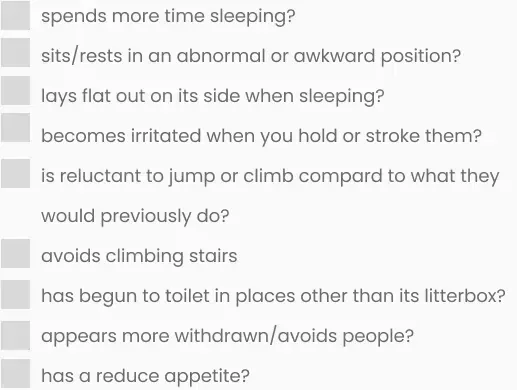
Cat Checklist
Is your cat showing signs of arthritis?
Please complete this self-evaluation and share it with our vet to help identify the potential onset of arthritis in your cat.
Have you noticed that your cat:

Dog Checklist
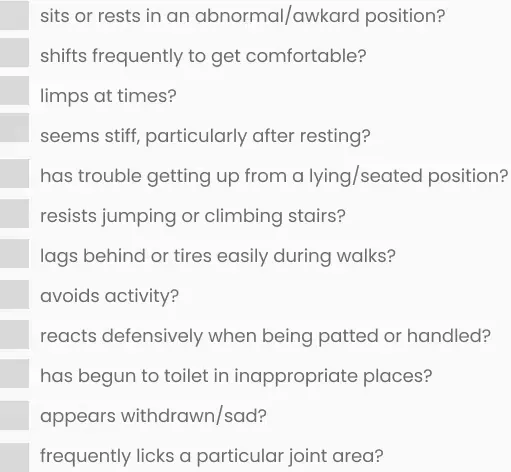
Does your dog show signs of arthritis?
Please complete this self-evaluation and share it with our vet to help identify the potential onset of arthritis in your dog.
Have you noticed that your dog:
How do we prevent chronic pain from developing?
The aim is to successfully treat acute pain when it presents. The longer it persists, the more likely a chronic state will develop. For the limping patient start ani inflammatory treatment early and for the full duration of the course.
For the dental patient, addressing diseased mouths before severe periodontal disease sets in.
Using local blocks at the time of even routine surgery to stop the development of pain. Making use of ancillary treatments such as icing post surgery and rehabilitation exercises.
Dr Angela Phillips is also a member of the International Veterinary Association of Pain Management and has completed the International Veterinary Association of Pain Management (IVAPM) Pain Management Core Course in multi modal aspect of pain management, both acute and chronic.
What if chronic pain is already occurring?
The treatment of pain has progressed a lot in the last 5 years. Where once it was give them an anti inflammatory course and all will be ok. Now we have a whole list of modalities that block or dappen pain at various levels. We have drugs that slow the nerve impulse that causes pain, drugs that reduce the pain response in the spinal cord and medications that reduce the perception of pain. We call this a multi modal approach to treating pain. There are also a range of non-pharmaceutical ancillary methods we can utilise. For very severe cases we have a team of pain practitioners that can come to our clinic to work with those patients.
Our Sydney Animal Hospital teams completed a staff training seminar ‘Fundamentals of Anaesthesia’. Dr Donna White BVSc (hons) MVS MANZCVS (Anaesthesia and Critical Care) from the Sydney Animal Pain Clinic provided our team with the most up to date information on anaesthesia and pain management for our clients pets. The seminar included Anaesthesia, Anaesthestic equipment and Pain Management Medications.
DID YOU KNOW from Dr Donna;
Did you know cats may sleep more when in pain?
Did you know cats and dogs may eat less when in pain?
Did you know, unlike humans, dogs rarely vocalise when in pain?
There are different pain medications for acute pain and chronic pain – your vet can help with ensuring your pet receives the right medication for their pain condition?
Dogs and cats can get arthritis just like people, and just like people there are lots of ways to treat this, from gentle exercise, complementary therapies and medications. Talk to your vet today to see if your pet could benefit from any of these


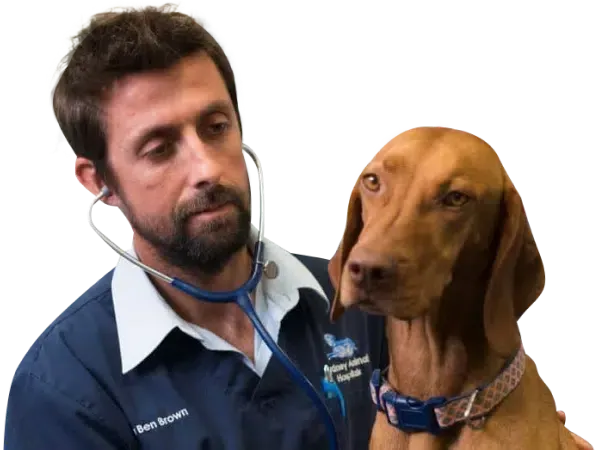
5 Signs your Dog Might Be In Pain with Dr Ben Brown
For more information on pain in pets Sydney Animal Hospitals Northern Beaches Dr Ben Brown spoke with the team at DOOG (Dog Owners Outdoor Gear) on 5 signs your dog might be in pain.
7 Sydney Animal Hospital Locations Across Sydney
Sydney Animal Hospitals have 7 locations across Sydney for your convenience
Newtown
Open 7 days
Inner West
Open 7 days
1A Northumberland Ave,
Stanmore NSW 2048
(02) 9516 1466
Norwest
Open 7 days
8/1 Celebration Dr
Bella Vista NSW 2153
(02) 8883 0411
Kellyville
Open 7 days
106 Windsor Rd,
Kellyville NSW 2155
(02) 8883 0533
Baulkham Hills
Open 7 days
472 Windsor Rd,
Baulkham Hills NSW 2513
(02) 9157 5557
Newport
Open 7 days
Corner of 1 Palm Rd, Barrenjoey Rd
Newport NSW 2106
(02) 9997 4609
Avalon
Open 7 days
710 Barrenjoey Rd,
Avalon NSW 2107
(02) 9918 0833


