

VETERINARY SERVICES
Itchy Ear
Ear Problems in Pets
Itchy, smelly or inflamed ears are a common problem in pet dogs and cats. The ear canal in dogs and cats is L-shaped with an initial vertical canal transitioning down to a horizontal canal which then goes into the tympanic membrane or ear drum. On the inside of the ear drum is the middle ear.
This design of the ear canal in pets can predispose the canal to collecting waxy debris, moisture or trapped foreign bodies – such as grass seeds. If the ear tissue becomes irritated or inflamed, this can quickly develop into a painful otitis – or ear infection. Secondary infections with bacteria and yeast can commonly occur due to the semi-closed environment of the ear.
Ear infections can occur in any breed of cat or dog, but dog breeds with large floppy ears like Labradors, Golden Retrievers, Cocker Spaniels, Cavalier King Charles Spaniels and Poodles – and their crosses (eg Cavoodles, Labradoodles etc) can be more prone to developing ear problems.
Ear problems in pets can occur as a result of allergies, moisture build up, excessive ear wax, parasites such as ear mites, foreign bodies such as grass seeds, and tissue growths such as polyps.
Signs of ear problems
If your pet develops an ear problem, they may show signs such as shaking their head, scratching at their ears, holding their head on a tilt or appearing to lose their balance, being reluctant to let you touch their head, or yelping in pain if you do touch their ear.
The ear itself may look red, inflamed or swollen, have a strong odour, be hot to touch or there may be a discharge from the ear. Otitis is the term used to describe an inflamed or infected ear, and if the pet has been excessively shaking or scratching their sore ear, they may develop an aural haematoma – which is a painful blood-filled swelling of the outer ear or pinnae.
It is important to seek veterinary attention early if your pet show any signs of ear disease. The progression to secondary ear infections can occur quickly and they can become very painful for the pet.
Causes of ear disease in pets
Ear problems in pets can be caused by a variety of reasons:

Allergens
If your pet suffers from underlying allergies, or atopy – this can predispose them to developing ear problems. The ear is essentially part of the skin, and if an allergen that is inhaled, ingested or touches the pet’s skin through contact, causes skin inflammation and irritation, this inflammation can commonly be more evident in the ears, and the paws – resulting in irritated ears.

Ear mites
Are microscopic parasites that live and breed inside the ear canal. They cause intense irritation to the pet, causing them to scratch and rub their ears. Ear mites are more common in puppies however they can occur in adult dogs, and also in cats, as well.

Foreign bodies
If a foreign body such as a grass seed or burr gets lodged inside your pets ear, this can be very uncomfortable and cause the pet to scratch at their ears or shake their head. This can then lead to inflammation, irritation and potentially infection of the ears.

Infections
Pets can suffer from ear problems caused by infections from bacteria, or fungi/yeast. The enclosed, and often damp environment of the ear makes it a good location for microbial growth – especially yeast. Excess wax in the ear canal, or abrasions to the skin from the pet scratching as a result of allergies or from having a foreign body lodged inside the ear, often lead to secondary bacterial and/or yeast infections.
Examination and treatment of ear problems in pets
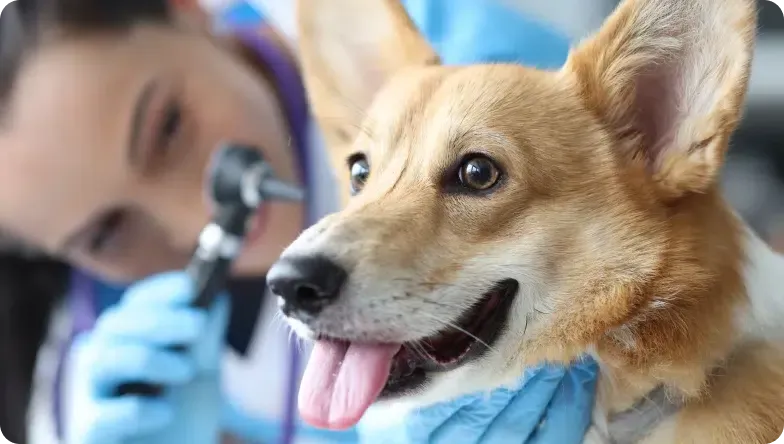
Our veterinarians will examine your pet’s ears – both from the outside, and also examining down the ear canal via use of an otoscope – to assess the inner health of the ear canal and to also check if the pet’s eardrum is intact. If your pet’s ear is painful and they don’t allow examination, the veterinarian may recommend an examination under general anaesthetic so that your pet remains comfortable and the ear can be more easily assessed and treated.
Often a swab sample may be collected from within the pet’s ear, with the sample then assessed under the microscope to look for parasites such as ear mites or to determine if bacteria or yeast are present. Swab samples from the ear canal can also be sent for laboratory testing to determine the type of infection present and what are the best antimicrobial medications required to treat it.
Our veterinarians will formulate a treatment plan best suited to your pet. Treatment for ear problems may involve medications to treat any infection, inflammation or parasites, along with concurrent treatment of any underlying issues such as skin allergies (atopy). This may include prescribing topical and/or oral medications, as well as recommending the regular use of ear cleaner products at home.
In some cases, the veterinarian may recommend that your pet has an ear clean procedure performed under a general anaesthetic. This can help to clean the ear canal, allow more examination of the ear drum and samples to be collected, and enable medications to be directly instilled into the ear canal.
Prevention of ear problems in pets
If your pet has been prescribed any medications to treat an ear problem, it is important to follow all veterinary home care instructions, and to regularly check your pet’s ears and report back to the veterinarian if you have any concerns.
There are a number of things you can do to help prevent ear problems developing in your pet. Firstly, it’s beneficial to regularly check your pet’s ears – this not only allows you to pick up any developing problems early on, but it also means that your pet will be more comfortable with tolerating an ear examination by the veterinarian if it is required. For dogs, it can be helpful to gently help dry their ears after swimming or bathing – to minimise the amount of moisture remaining in the ear.
Never poke anything (such as cotton tips) into your pet’s ear, however you can safely clean the inside of their ear gently using your finger with a damp tissue or baby wipe. Our veterinarians may sometimes recommend the regular use of an ear cleaner solution – this should be used only as frequently as has been advised by the veterinarian, and remember to only use a recommended ear cleaner product.
To protect your pet against ear mites, we recommend using a regular parasite prevention product which includes coverage to prevent ear mites – chat with our friendly team for further information on which parasite prevention products are best for your pet, or join Sydney Animal Hospitals Preventative Health Care plans and we’ll take care of it for you.
Cutting-Edge Diagnostics at Sydney Animal Hospitals Newport
This AI-powered technology provides real-time cytology with deeper diagnostic insights.
Results in Real Time
No more waiting days for lab results
More Diagnostic Insights Than Traditional Methods
Reference laboratory-level accuracy
Convenient & Stress-Free
No need to send samples away
Better Care & Faster Treatment
Catching infections early means a healthier & happier pet
7 Sydney Animal Hospital Locations Across Sydney
Sydney Animal Hospitals have 7 locations across Sydney for your convenience
Newtown
Open 7 days
Inner West
Open 7 days
1A Northumberland Ave,
Stanmore NSW 2048
(02) 9516 1466
Norwest
Open 7 days
8/1 Celebration Dr
Bella Vista NSW 2153
(02) 8883 0411
Kellyville
Open 7 days
106 Windsor Rd,
Kellyville NSW 2155
(02) 8883 0533
Baulkham Hills
Open 7 days
472 Windsor Rd,
Baulkham Hills NSW 2513
(02) 9157 5557
Newport
Open 7 days
Corner of 1 Palm Rd, Barrenjoey Rd
Newport NSW 2106
(02) 9997 4609
Avalon
Open 7 days
710 Barrenjoey Rd,
Avalon NSW 2107
(02) 9918 0833


