
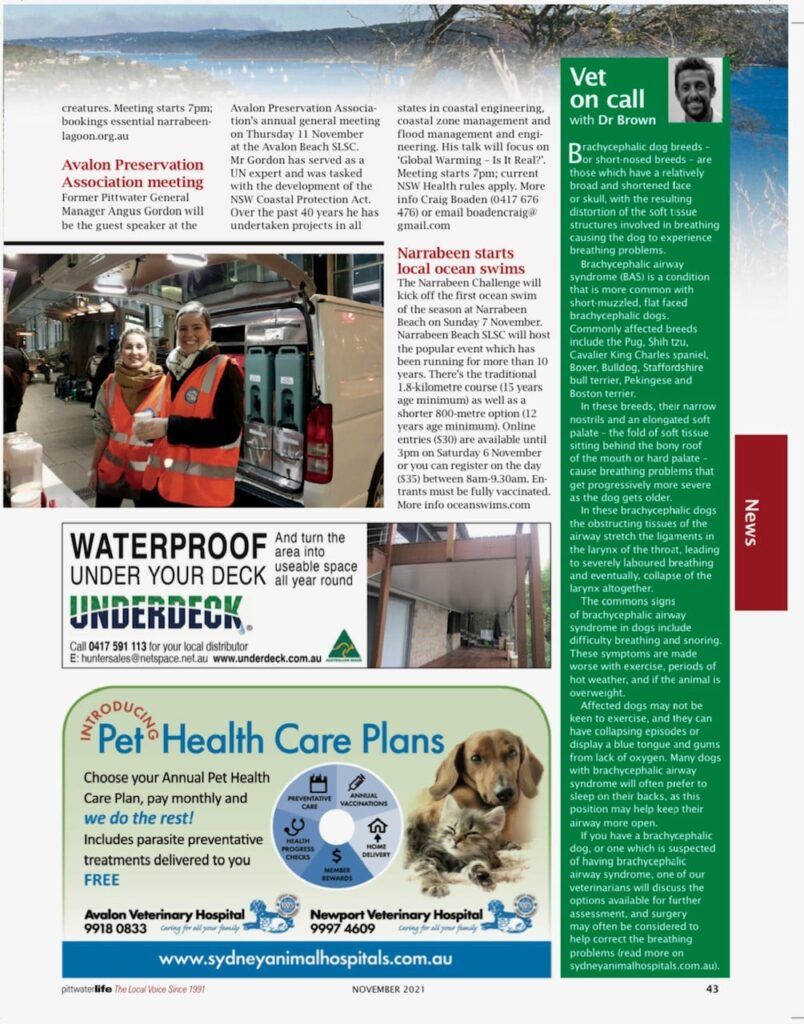
Brachycephalic dog breeds – or short-nosed breeds, are those which have a relatively broad and shortened face or skull, with the resulting distortion of the soft tissue structures involved in breathing causing the dog to experience breathing problems.
Brachycephalic airway syndrome (BAS) is a condition that is more common with short-muzzled, flat faced brachycephalic dogs. Commonly affected breeds include the Pug, Shih tzu, Cavalier King Charles spaniel, Boxer, Bulldog, Staffordshire bull terrier, Pekingese and Boston terrier.
In these dog breeds, their narrow nostrils and an elongated soft palate – the fold of soft tissue sitting behind the bony roof of the mouth or hard palate, cause breathing problems that get progressively more severe as the dog gets older. Brachycephalic airway syndrome is exacerbated by exercise, heat and obesity.
Because of their shortened muzzle and relatively flat faced head structure, in these brachycephalic dogs the obstructing tissues of the airway stretch the ligaments in the larynx of the throat, leading to severely laboured breathing and eventually, collapse of the larynx altogether.
The commons signs of brachycephalic airway syndrome in dogs include difficulty breathing and snoring. These symptoms are made worse with exercise, excitement, periods of hot weather, and if the animal is overweight.
Affected dogs may not be keen to exercise, and they can have collapsing episodes or display a blue tongue and gums from lack of oxygen – referred to as cyanosis. Many dogs with brachycephalic airway syndrome will often prefer to sleep on their backs, as this position may help keep their airway more open.
If you have a brachycephalic dog, or one which is suspected of having brachycephalic airway syndrome, one of our veterinarians will discuss the options available for further assessment, and surgery may often be considered to help correct the breathing problems, read more on our website https://www.sydneybulldogclinics.com.au/
If you have any further questions about brachycephalic airway syndrome, or brachycephalic dog breeds – please speak with one of our friendly veterinary team at your local Sydney Animal Hospitals;
Newtown
(02) 9519 4111
69-73 Erskineville Road Erskineville
Inner West
(02) 9516 1466
1A Northumberland Ave Stanmore
Norwest
(02) 8883 0411
Unit 8, 1-3 Celebration Dr Bella Vista
Kellyville
(02) 8883 0533
106 Windsor Rd Kellyville
Newport
(02) 9997 4609
1 Palm Rd Newport
Avalon
(02) 9918 0833
710 Barrenjoey Rd Avalon Beach

As seen in the November Issue of Pittwater Life Magazine click here to read more
#PittwaterLife #LocalMedia #Brachycephalic #BrachycephalicAirwaySyndrome #BAS