

Just like humans, animals need greater care in their senior years

April 8, 2020
Just like humans, animals need greater care in their senior years

Just like humans, animals need greater care in their senior years. Dogs are considered seniors when they reach their 7th birthday, for cats it is their 10th birthday. Older age presents new health problems for our pets and it is important to be aware of the signs of aging as…

Cover of

[vc_row][vc_column][vc_column_text]Just like humans, animals need greater care in their senior years. Dogs are considered seniors when they reach their 7 th birthday, for cats it is their 10 th birthday. Older age presents new health problems for our pets and it is important to be aware of the signs of aging as early detection is vital, say Dr Ben Brown.


Some symptoms of aging may be more obvious, like an intolerance to exercise or limited mobility, while others are much more subtle. It is important to monitor your pet’s eating patterns and body weight, as obesity can cause many health issues, including osteoarthritis and diabetes in old age. Similarly, if your pet is too thin it could be having dental issues, metabolic disease or certain types of cancers. Sleeping patterns and cognitive behaviour are also things to look out for; a cat or dog that isn’t aware of its surroundings or has difficulty recognizing people may be experiencing early cognitive dysfunction or dementia. Also, looking at the condition of your pet’s coat and how much your cat is grooming itself can also be indicative of its health.


Importantly, a less obvious but just as important sign of aging is how much your pet is drinking and urinating. How much your pet is or isn’t drinking can be indicative of many problems, from endocrine issues to kidney disease. It’s often difficult to check, especially in multi pet households, but water intake should be monitored closely if possible. The normal water intake for cats and dogs is approximately 50ml per kg bodyweight per 24hrs, any level above this warrants a check-up.


Because our pets can’t talk to us and communicate how they feel, senior pets should have a routine blood test every year. This helps to determine the health of many important internal organs such as the kidneys and liver and can often be the first indicator that something is wrong. Drop into one of our hospitals this month to discuss our senior pet health focus.


If you have any questions, please call your local Sydney Animal Hospitals on:

Newtown (02) 9519 4111
69-73 Erskineville Road Erskineville

Inner West (02) 9516 1466
1A Northumberland Ave Stanmore

Norwest (02) 8883 0411
Unit 8, 1-3 Celebration Dr Bella Vista

Kellyville (02) 8883 0533
106 Windsor Rd Kellyville

Newport (02) 9997 4609
1 Palm Rd Newport

Avalon (02) 9918 0833
710 Barrenjoey Rd Avalon Beach


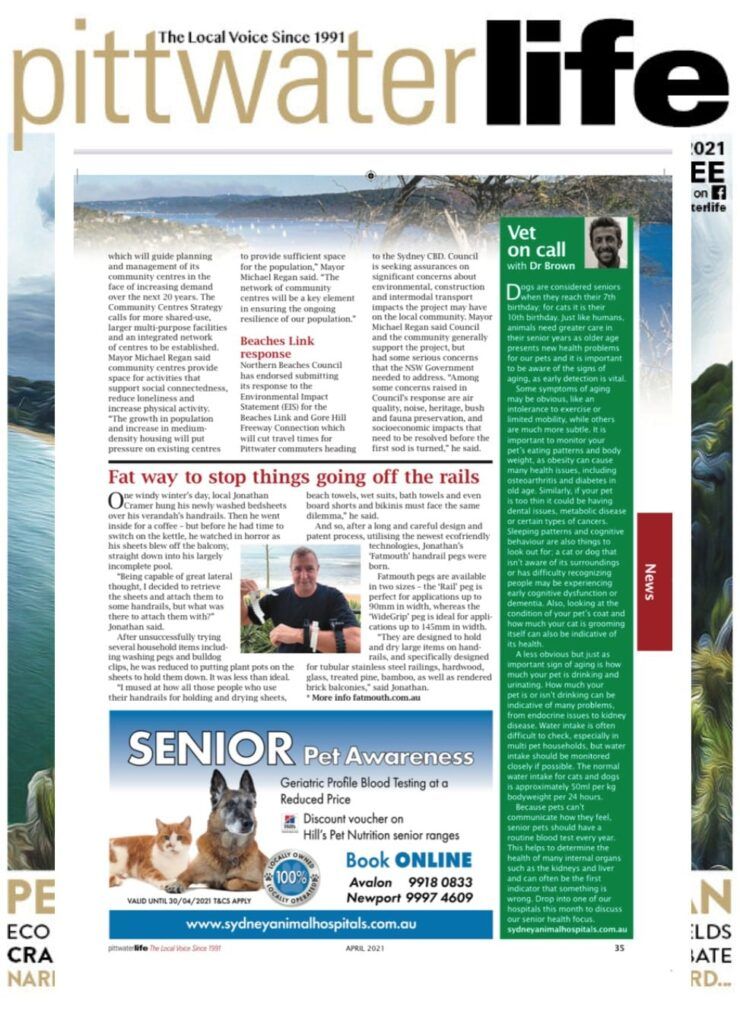
As seen in April Issue of Pittwater Life magazine, read more 

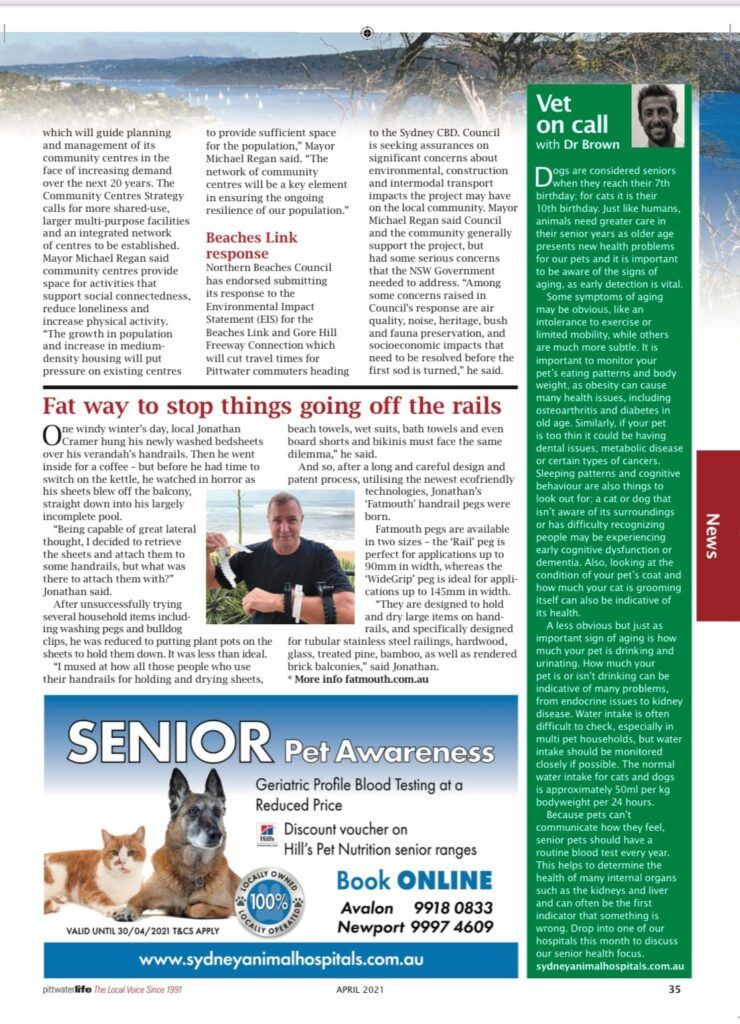
Cover of   Article with text, a photo of a man, and ads for senior pet care.


[/vc_column_text][/vc_column][/vc_row]

Recent Posts

A Cavoodle puppy sitting on the grass
February 5, 2026
Explore our complete Cavoodle dog breed guide and learn about their behaviour, health, grooming, training, and why they’re one of Australia’s favourite pets.
Dog lying on a bed wearing an elizabethan collar
February 5, 2026
Discover essential tips for helping your pet heal after animal surgery, including activity restrictions, pain management, wound care, follow-up vet visits and more.
A dog looking at a block of chocolate
February 5, 2026
This blog covers everything you need to know about chocolate poisoning in dogs, including potentially fatal amounts and what to do if your pet is at risk.
Show More