



Heart disease in dogs

August 20, 2024
Heart disease in dogs

Heart disease affects 10% of all dogs.1 In good news, if problems are diagnosed early and proper treatment given, a dog with heart disease can live a longer, fuller life.

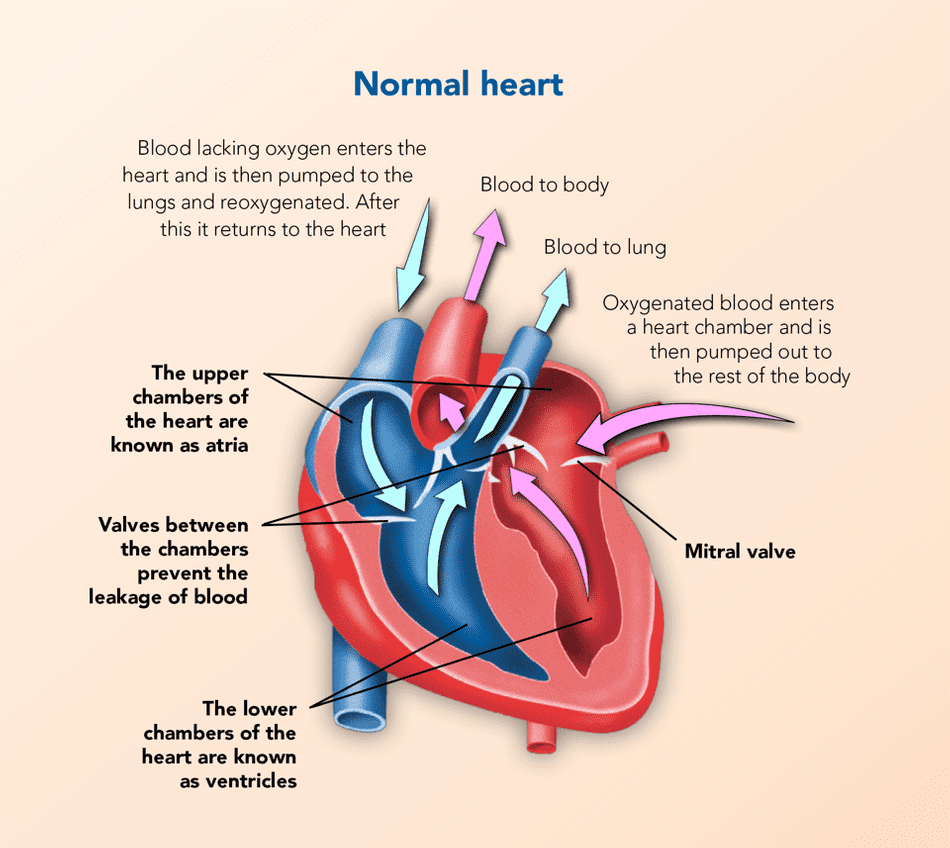
Diagram of a normal heart showing blood flow, chambers (atria, ventricles), valves, and oxygenation process.
Text states 10% of dogs are affected by heart disease; early diagnosis and treatment can improve life.

Heart problems in dogs can be present from birth; this is termed congenital heart disease. More commonly, disease develops over the pet’s lifetime, this is known as acquired disease. Acquired heart disease accounts for an estimated 95% of all heart conditions in dogs.2

Causes of acquired heart disease in dogs include:

  • valve defects (e.g. myxomatous mitral valve disease)
  • cardiac muscle disease (e.g. dilated cardiomyopathy)
  • heartworm

Heart diseases can result in heart failure. Heart failure occurs when the body can no longer compensate for the disease within the heart. At this point dogs start to show signs such as laboured or fast breathing at rest, reluctance to exercise, lethargy and weight loss.

While there is no cure for heart failure, it can usually be managed with medication and care. With appropriate management, we can also delay the progression of heart disease to heart failure.

Text states Mitral Valve Disease is the most common heart disease in dogs. Video button with dog silhouette.

What are the signs?

Dogs with heart disease may show no outward signs. However, in time, dogs with heart disease may develop heart failure, leading to the appearance of clinical signs.

Signs of heart failure can include:

  • Laboured or fast breathing at rest
  • Reluctance to exercise/tiring more easily
  • Poor appetite
  • Weight loss
  • Enlarged abdomen
  • Weakness
  • Fainting

Text:

What can you do for your dog?

  • Regular veterinary check-ups – at least once a year to monitor your dog’s heart health
  • Maintain a healthy diet for your dog
  • Encourage your dog to exercise and walk regularly unless otherwise directed by your vet

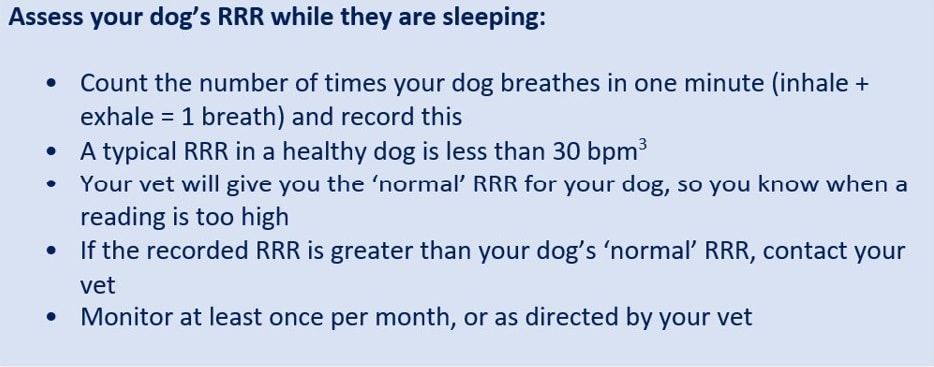
Smartphone screen displaying To measure the RRR simply count the number of breaths per minute. You can track your dog’s RRR by either using the free Heart2Heart Respiratory App or by keeping a record in a diary.
The Heart2Heart Respiratory App, is a free, easy-to-use App to help you track your dog’s RRR.

Instructions for assessing a dog's RRR (Respiratory Rate and Rhythm) while sleeping, including counting breaths and contacting vet.

Get the App from your favourite App store:

Recent Posts

A Cavoodle puppy sitting on the grass
February 5, 2026
Explore our complete Cavoodle dog breed guide and learn about their behaviour, health, grooming, training, and why they’re one of Australia’s favourite pets.
Dog lying on a bed wearing an elizabethan collar
February 5, 2026
Discover essential tips for helping your pet heal after animal surgery, including activity restrictions, pain management, wound care, follow-up vet visits and more.
A dog looking at a block of chocolate
February 5, 2026
This blog covers everything you need to know about chocolate poisoning in dogs, including potentially fatal amounts and what to do if your pet is at risk.
Show More