

Gum Disease in Cats

August 21, 2024
Gum Disease in Cats

Safeguard your cat's health. Protect their vital organs from toxins by preventing gum disease. Book a dental checkup at Sydney Animal Hospitals today.

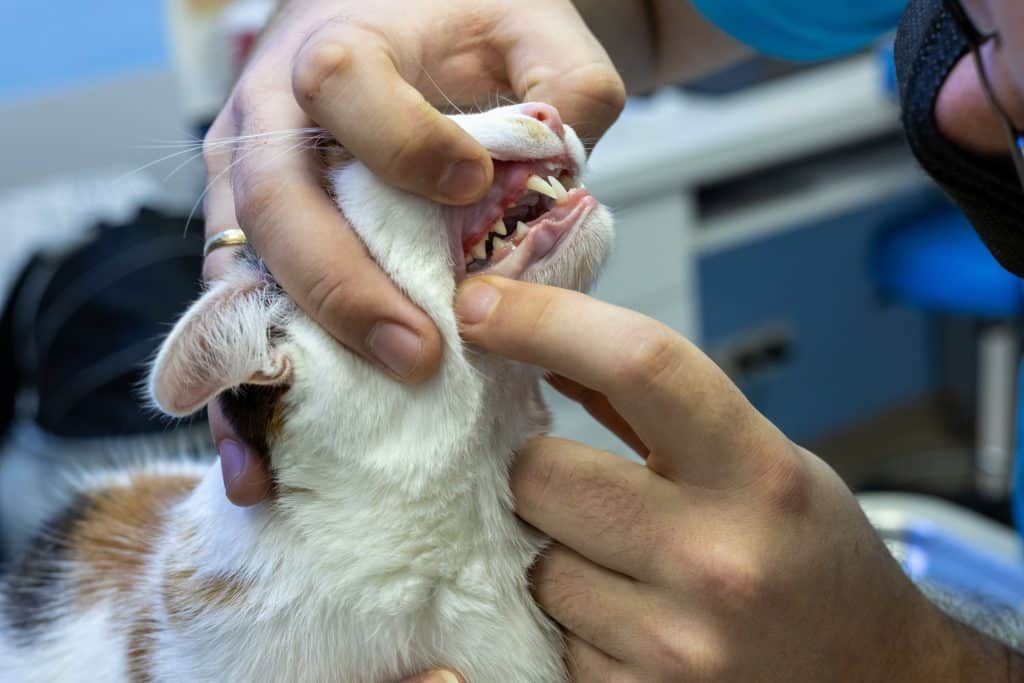
Veterinarian examining a cat's mouth. Cat is tricolor, teeth visible, held by hands in a clinic setting.

Gum disease affects vital parts of your cat’s body

Gum disease can affect more than just your cats oral health as toxins caused by periodontal disease are absorbed into your cat’s bloodstream, which in turn is filtered through the kidneys, liver and brain. This process of filtering toxins causes small infections to occur, causing permanent and sometimes fatal organ damage.

In addition, many veterinarians suggest that actual bacterial colonies can spread, aided by the circulatory system, to set up house within your cat’s tissues, commonly in the heart valve areas, kidneys and liver which can cause more serious long term issues. However, the best form of treatment, instead of extracting teeth and performing complex dental procedures, is to prevent the damage to your cat’s teeth from happening in the first place, before it becomes a problem. This can be achieved through regular dental care.

Age is a factor contributing to gum disease in cats

Pet dental care should be regularly maintained from the time your cat is a kitten, because by the time your cat is a ‘senior’, the effects of neglected dental care will be obvious and potentially life threatening. Periodontal disease is very common among older pets, and one of the more serious health problems that can occur, as rotting teeth can cause gum and mouth infections which can migrate to the vital organs, causing permenant damage.

Keep up your cat’s chewing habits

As your cat ages, it gets a little lazier about chewing food and playing with the toys it used to love. Your cat may even start to prefer softer foods. A gradual fading interest in chewing and playing with toys is normal as your cat gets older; but if your cat suddenly stops chewing altogether or looks like it is eating ‘gingerly’ or not as comfortably as it used to, it could be a sign that its teeth and gums are sore and need professional attention.

Make sure your vet checks your older cat’s teeth at your scheduled exam times, but also do it right away if you notice a sudden change in eating or chewing behaviour. Your vet may even recommend that your cat’s teeth be cleaned. We have the facilities to lightly sedate your cat to reduce any potential for trauma or discomfort.

Recent Posts

A Cavoodle puppy sitting on the grass
February 5, 2026
Explore our complete Cavoodle dog breed guide and learn about their behaviour, health, grooming, training, and why they’re one of Australia’s favourite pets.
Dog lying on a bed wearing an elizabethan collar
February 5, 2026
Discover essential tips for helping your pet heal after animal surgery, including activity restrictions, pain management, wound care, follow-up vet visits and more.
A dog looking at a block of chocolate
February 5, 2026
This blog covers everything you need to know about chocolate poisoning in dogs, including potentially fatal amounts and what to do if your pet is at risk.
Show More